St Andrew's Blog - Theology & Life

Theology and Life Banner New.jpg

The Akathist Hymn

By Dr Andrew Mellas (Senior Lecturer in Church History and Liturgical Studies)

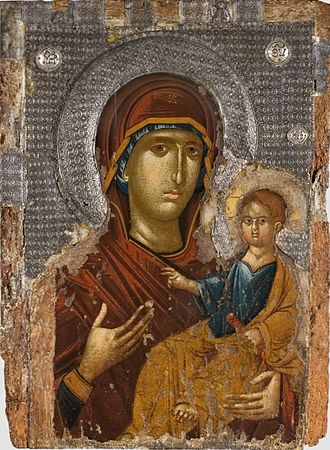
The Akathist Hymn, which is a masterpiece of Byzantine hymnography dedicated to the Mother of God, is a song close to the hearts of the Orthodox faithful. It is called ‘Akathist’ (which means ‘not sitting’) because during a vigil held in thanksgiving to the Virgin Mary, who delivered Constantinople from invasion in the seventh century, the Byzantines chanted the Akathist Hymn and everyone remained standing during this vigil. According to the sources, during the Avar siege of Constantinople in 626 AD, the King of the Avars looked up at the walls of the city while his fleet was being destroyed and saw a woman in shining garments with a face full of light. And, of course, that woman was the Theotokos...

St John Climacus: Some Cursory Reflections on the Ladder of Divine Ascent

By Associate Professor Philip Kariatlis (Sub-Dean)

The Fourth Sunday of Holy and Great Lent is dedicated to St John of the Ladder, an ascetic saint of great eminence in the life of the early Church (6th-7th centuries), and author of one of the greatest classics of Christian spirituality, The Ladder of Divine Ascent. It is a work which is not only read in monasteries today but is equally loved and has been embraced by the Orthodox faithful throughout the world more broadly, and indeed throughout all time—a work most relevant for all those seeking to personally encounter the love of Christ in their life...

The Cross: Our Entry into Life

By Associate Professor Philip Kariatlis (Sub-Dean)

At the heart of Holy and Great Lent, the Church offers the faithful an opportunity to venerate the precious and life-giving Cross of Christ—to honour and embrace it wholeheartedly and with fervour in their daily lives. On this, the third Sunday of our Lenten journey, we pause to contemplate the mystery and transformative power of the Cross. We do so not only to find strength and encouragement as we strive to complete the forty-day pilgrimage but also to deepen our appreciation of its centrality—not just for Lent, but for our daily existence. Indeed, as we will come to realise, when even the faintest spark emanating from the Cross is rekindled within us, our entire being is transfigured...

Salutations Services During Holy & Great Lent

By Associate Professor Philip Kariatlis (Sub-Dean)

During the Lenten season leading to Holy Week and the feast of the Resurrection, the Church in all her wisdom, has included a Friday evening Service known as the ‘Salutations’—in Greek Χαιρετισμοί—a reference to the Akathist Hymn sung to the Theotokos. On the first four Fridays, the faithful will sing only a portion of the Akathist hymn, whilst on the fifth Friday of Great Lent the entire Service is chanted. This hymn consists of 24 stanzas arranged alphabetically celebrating the role of the Theotokos in God’s salvific plan for the world. A refrain, “Rejoice o unwedded Bride” is repeatedly chanted, highlighting her distinct role in God’s saving plan. This gives us a clue as to the meaning behind this special service...

The Presentation of the Lord: A Brief Theological Reflection

By Associate Professor Philip Kariatlis (Sub-Dean)

The Presentation of the Lord, also known as the Feast of Hypapante [Ὑπαπαντή], is a significant event in the Christian tradition, commemorating the moment when the infant Jesus was brought into the Temple in Jerusalem by His mother, Mary and Joseph, in accordance with Jewish law. The term Hypapante means “reception”, signifying the encounter between the Messiah with both the righteous Simeon and the prophetess Anna in the Temple—both of whom had been waiting for this moment for their entire lives. Dating back to the early centuries of the Church, the commemoration of this feast in the Eastern Orthodox tradition is considered one of the Twelve Great Feasts...

Pages