- Home
- About us
- Students
- Courses
- Research
- Library
- News & Events
- Gallery
- Contact
- Our Blog
Latest News

The Joy and Light that Endures:
The Feast of Christmas amid the
Darkness and Discord of our Times
by Assoc. Professor Philip Kariatlis (Sub-Dean)
Let the heavens be glad, and let the earth greatly rejoice. Alleluia.
Εὐφραινέσθωσαν οἱ οὐρανοί, καὶ ἀγαλλιάσθω ἡ γῆ. Ἀλληλούϊα.
Psalm 95:11
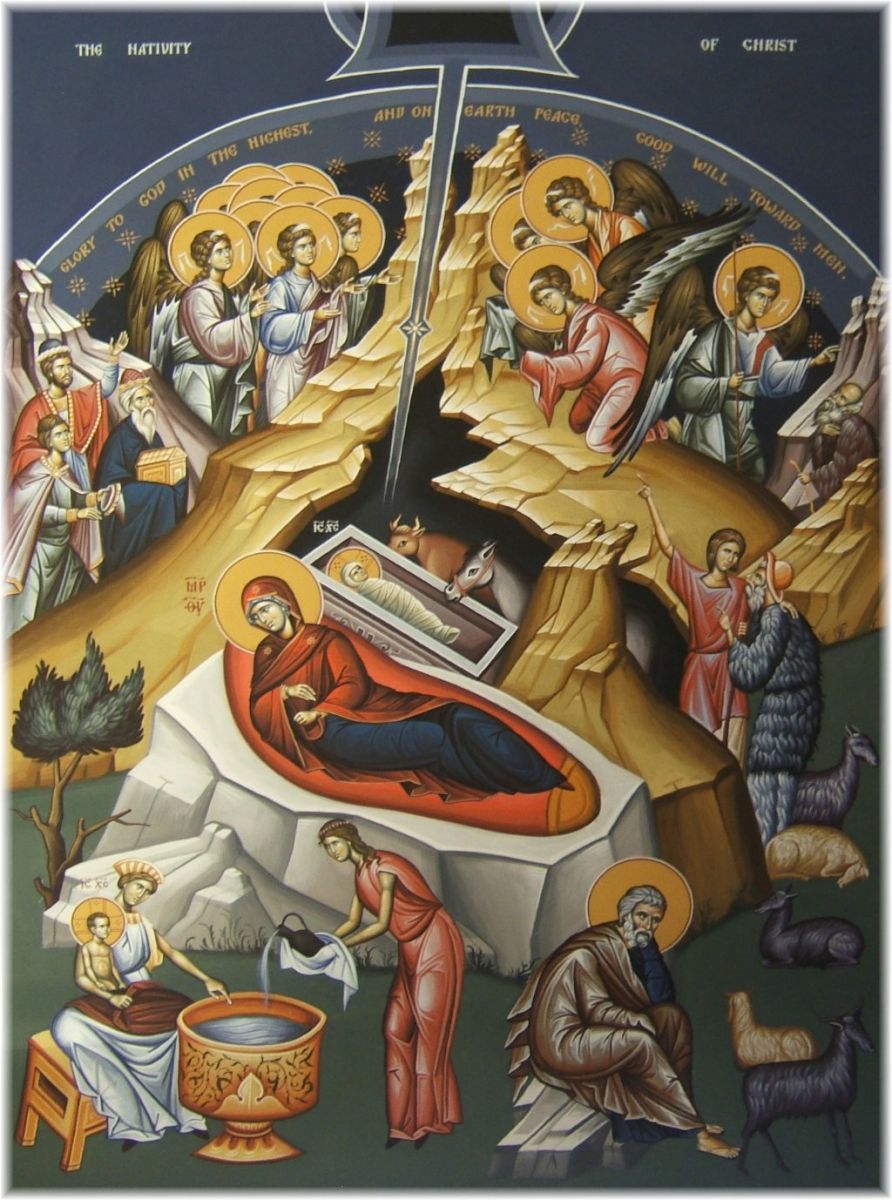
The great Feast of the Nativity celebrates the birth according to the flesh of our Lord and Saviour Jesus Christ, the pre-eternal and timeless Son of God in the lowly town of Bethlehem of Judaea. It is a sacred time of the year during which opportunity is given for offering glory and thanksgiving to God our heavenly and almighty Father for the immeasurable depth of His boundless love revealed in the sending of “His only begotten Son into the world that we might live through Him” (1 John 4:9). Essentially, the feast proclaims ‘the good news’ that the pre-eternal Word became like us in every respect—yet without sin (cf. Heb 4:15)—precisely because He loved us and out of His profound compassion and immeasurable mercy wanted to impart for us a pathway back to God. The celebration of Christmas more than ever this year speaks with renewed urgency, especially in light of the growing turbulence, hostility, and violence that so markedly characterise the world today—most notably, as this was painfully witnessed in the shocking loss of innocent life at Bondi Beach (on 14 December 2025) through the horrific acts of terror and the heinous ideologies that led to this, all of which aimed at sowing hatred, and worse still dehumanising the human person, who in the Judaeo-Christian tradition is considered a sacred icon of God.
The feast of the Nativity therefore stands as a striking reminder—made all the more vital in our times precisely because of the darkness and discord of our contemporary context—that the abiding joy and light of Christ, the newborn Babe, amongst us, together with the peace of His presence cannot be reduced to a societal folkloric custom; rather, we are beckoned, more than ever, to embrace this feast as the only enduring and ultimately undefeatable reality in our lives. In proclaiming, “Glory to God in the highest and on earth peace, good will toward all people” (Lk 2:14), the Church reminds us that it is precisely into such darkness that the Light of the world is born on Christmas day, dispelling all darkness; offering hope, meaning and consolation; and above all bestowing the promise of life that endures forever, namely, everlasting life—the most compelling reason for joy in this life. In fact, amidst the lowliness of a cave and the humility of swaddling clothes, the radiance of the newborn Babe’s divinity radiantly shone forth inviting us into the vast and liberating horizons of God’s eternity, a life without end in His joyous Presence.
The Gospel reading proclaimed on Christmas day, during the service of the Divine Liturgy (Matthew 2:1 – 12), invites us to contemplate the mystery of Christ’s birth not as a mere divine response to a world unsettled by fear and disorientation, but as the historical unfolding of God’s pre-eternal and consummate loving plan for the world: namely, His desire to unite humanity to Himself; to communicate all that He is by nature by way of gift to the world; and to draw the human person—by grace—into the boundlessness of His eternal life. Those within the Gospel reading who were able to discern and receive the presence of the Son of God, the awaited Messiah, in their midst, responded with joy. In the Church’s hymns, just like within the Gospel, we are told, for example, that the shepherds were overcome with joy because, as they were keeping watch over their flock at night, they witnessed “an astonishing epiphany of light. For the glory of the Lord surrounded them and an angel shouted: Praise the Lord, for Christ is born.”[1] This reveals a fundamental truth: authentic joy, quite simply yet profoundly is found in embracing the newborn Babe in our lives. It is not found in any quest for human dominance over others, nor in the preservation of earthly power, all of which will die with us and will be no more—let alone the taking of human life as we witnessed in Bondi. Rather, genuine joy is realised in the gracious reception of the gift of Christ’s abiding love and the abundance of life that He alone came to bestow upon us—a life that transcends fear, suffering, and death itself. It is here, indeed, that the profound joy of the Feast of the Nativity is to be found, and one into which we are invited by the Church to enter and to recover in our lives.
Upon further reflection of the Gospel reading, we are told that whilst the birth of Christ provoked agitation and fear in Herod—exposing the anxiety and insecurity of hearts shaped by corruption and evil proclivities—yet, in striking contrast, the Magi, guided by divine providence, were not afraid, but were rather overcome with overwhelming joy, rejoicing “with exceedingly great joy [χαρὰν μεγάλην σφόδρα]”(Mt 2:10) upon discovering the Child; they therefore responded with worship and thanksgiving. The Gospel describes the joy of the Magi in the following way: “When they saw that the star had stopped, they were overwhelmed with joy”(Mt 2:10).Their journey, guided by the star, bears witness to God’s abiding providence, not only in initiating their search but accompanying them throughout their entire sojourn, whilst at the same time, revealing the cosmic significance of Christ’s birth, before whom even the created order—the stars, in this case (cf. Mt 2:2)—offered homage. Their return “by another way [δι’ ἄλλης ὁδοῦ]”(Mt 2:12) signifies not merely a physical redirection, but an inner transformation and reorientation of heart and soul, shaped by divine peace and light, one that is also offered to all human persons throughout time. Accordingly, the joy of Christ’s birth and abiding presence within the world today is humanity’s capacity now to turn away away from self-destructive tendencies and to reorientate itself towards goodness, life and communion with God, namely authentic human flourishing upon receiving Christ in their lives.
Set against today’s global restlessness, marked, as already noted by dangerous ideologies, deepening division, and the corrosive spread of hatred, this Gospel proclaims a message of enduring and urgent relevance. In the mystery of the Incarnation, Christ’s birth decisively breaks down the dividing wall between heaven and earth, healing and uniting a fractured creation, and revealing the Emmanuel—which means, ‘God with us’—not as a past historical memory, but as an abiding and life-giving reality. The unitive peace bestowed by our Lord and Saviour Jesus Christ during the festive and sacred season of Christmas, and the joy born from His abiding presence amongst us, are neither naïve sentiments of optimism nor escapist emotions often borne from suffering. Rather, they are the fruit of God’s loving and active presence within history—indeed, within us personally—throughout all time; a divine presence that can draw humanity away from fear, alienation, and violence, leading it instead toward the joy of communion, reconciliation, love and life. Indeed, it is precisely these gifts of true joy, inner peace and stillness which are the genuine marks by which we can be assured that our Lord has indeed been born within us. For this reason, anyone thinking that in harming another is acting in the name of God cannot but be considered nothing less than delusional and ultimately evil; namely lifeless and joyless! The gift of Christ’s nearness, only acts to transform and illumine the world with hope and meaning, assuring us that even amidst darkness and uncertainty, history remains firmly held within the universal embrace of God’s redemptive love; and that this love will ultimately be victorious.
It is precisely for this reason that even when surrounded by turmoil, the Church is not deprived of joy. On the contrary, when hope is firmly placed in Christ—especially in the wake of the recent atrocities which could otherwise easily lead one to lose one’s mind—we are granted the confidence that the world still remains under His loving providence. This assurance finds its ultimate expression in the risen Lord’s promise at the conclusion of St Matthew’s Gospel: “And remember, I am with you always, to the end of the age” (Mt 28:20). Whilst we will never comprehend God’s ‘logic’, especially in the face of atrocity where we might easily be tempted to think that He is absent, we are called to live with the conviction that God always acts lovingly towards His creation and will always bring an end which is for the world’s ultimate good. In this, St Paul reminds us: “We know that all things work together for good for those who love God”(Rom 8:28). And several verses later, St Paul notes: “He who did not withhold his own Son, but gave him up for all of us, will he not with him also give us everything else?”(Rom 8:32). The Gospel according to St Matthew begins with the coming of Christ into the world and ends with the promise that He remains lovingly amongst us for all time; this is the quintessential message that the Evangelist wishes to convey. Therefore, anchored in this conviction, the joy of Christmas becomes a living testimony that God remains among us, that He continues to guide, sustain, and heal the world in His inexhaustible love.
It is only against such a backdrop that the Church continues to bear witness to the joy of Christ and invites her faithful to rediscover its true meaning in their lives. It invites us, beyond the pain of the present, to discern the joy of His eternal kingdom that He has preordained for all of us; the ultimate victory of life over death. It is precisely for this reason that the Church summons us, beyond the darkness and discord, to remain joyous. Indeed, many of the hymns sung on this holy day summon us explicitly to this gift of heavenly joy: “Be glad in heart, you righteous; be exultant, O heavens; leap for joy, O mountains, at the birth of the Messiah [Εὐφραίνεσθε Δίκαιοι· οὐρανοὶ ἀγαλλιᾶσθε· σκιρτήσατε τὰ ὄρη, Χριστοῦ γεννηθέντος].” Earlier in the Matins service, the Church proclaims with boldness: “All things today are filled with joy, for Christ is born from the Virgin [Τὰ σύμπαντα σήμερον, χαρᾶς πληροῦνται· Χριστὸς ἐτέχθη ἐκ τῆς Παρθένου].”The Oikos of the feast gives voice to the eschatological joy revealed in the union of heaven and earth at Christ’s birth: “We have found hidden delight; come, let us receive the things of Paradise within the Cave [Τὴν τρυφὴν ἐν κρυφῇ εὕρομεν· δεῦτε λάβωμεν τὰ τοῦ Παραδείσου ἔνδον τοῦ Σπηλαίου].”The same joy resounds in the Vesperal Liturgy, where the faithful are invited to proclaim: “Come, let us rejoice in the Lord, as we tell about this mystery. The middle wall of separation has been broken down; the fiery sword has turned back; the Cherubim grant access to the Tree of Life.” The hymn continues by confessing the heart of the mystery: the eternal Son, the exact Image of the Father, takes the form of a servant, remaining what He was—true God—and becoming what He was not—human—out of love for humanity.
Finally, the Apolytikion of the feast brings together in a succinct way the themes of knowledge and illumination, together with divine nearness and salvation: “Your Nativity, O Christ our God, has caused the light of knowledge to rise upon the world. For therein the worshippers of the stars were by a star instructed to worship You, the Sun of Righteousness, and to know You as Orient from on high. Glory to You, O Lord.” This hymn proclaims with unwavering clarity that God is no longer distant, but near—visible, accessible, and present among us. It is in this truth, and in this light, that the Church dares to remain joyous and hopeful, confident that Christ, who has conquered death, will ultimately prevail. In this way, the joy proclaimed during the festive season of Christmas is revealed not as a fragile or fleeting sentiment, but as a gift rooted in Christ Himself. Indeed, we are called to recover this sense of joy that the feast of Christmas can offer. For the joy that Christ bestows is the joy of communion with God, wherein the pathway to heaven is now laid out for us.
For this reason, the birth of Christ gives birth to a joy that no violence, hatred, or death can ultimately overcome. As the Lord Himself declares, “These things I have spoken to you, that My joymay be in you, and that your joy may be complete [Ταῦτα λελάληκα ὑμῖν ἵνα ἡ χαρὰ ἡ ἐμὴ ἐν ὑμῖν ᾖκαὶ ἡ χαρὰ ὑμῶν πληρωθῇ]” (Jn 15:11). It is this joy—born of divine presence, sustained by the hope of our Lord’s ongoing providence, and sealed by Christ’s victory over death—that enables the Church, even during times of grief and uncertainty, to remain steadfast and radiant. Anchored in the promise that “the light shines in the darkness, and the darkness has not overcome it” (Jn 1:5), the faithful are invited to bear witness to this gift of Christ’s joy that endures, confident that in the newborn Babe the world has already been given the pledge of its ultimate renewal: a joy born from the Church’s firm conviction that, through intimate communion with Him, all humanity is truly capable of being united in an open and loving fraternity with one another and with God. Accordingly, together with the Church, it remains for us to sing out loud:
Christ is born! Glorify Him! Christ is come from heaven! Go and meet Him! Christ is on earth! Arise to Him! Sing to the Lord, all you inhabitants of earth, and all you peoples, praise Him, and with joyfulness extol Him who is glorified!
Χριστὸς γεννᾶται· δοξάσατε. Χριστὸς ἐξ οὐρανῶν· ἀπαντήσατε. Χριστὸς ἐπὶγῆς· ὑψώθητε. ᾌσατε τῷΚυρίῳπᾶσα ἡγῆ, καὶἐν εὐφροσύνῃ, ἀνυμνήσατε λαοί· ὅτι δεδόξασται
| About the Author |

Associate Professor Philip Kariatlis Sub-Dean of St Andrew's Greek Orthodox Theological College Associate Professor Philip Kariatlis is Academic Director and Associate Professor in Theology at St Andrew's. After taking an undergraduate degree in Theology from St Andrew's, he graduated from the University of Sydney with a degree in Arts, majoring in Modern Greek. He received a Master of Theology and a doctorate from the Sydney College of Divinity, where he studied under Professor Gerard Kelly. His doctorate was in the area of ecclesiology where he examined the notion of koinonia ... |
Useful links
Subscribe to our Blog!

Subscribe to our blog written by our Faculty and learn more about your Orthodox Christian faith
Connect With Us
|
|
|
|
Join Our |


.png)
Copyright © 2019 St Andrew's Greek Orthodox Theological College.
All Rights Reserved. | Website Terms & Conditions