- Home
- About us
- Students
- Courses
- Research
- Library
- News & Events
- Gallery
- Contact
- Our Blog
Latest News

Public Lecture by Faculty Member
May 11, 2026
admin
Public Lecture by Faculty Member
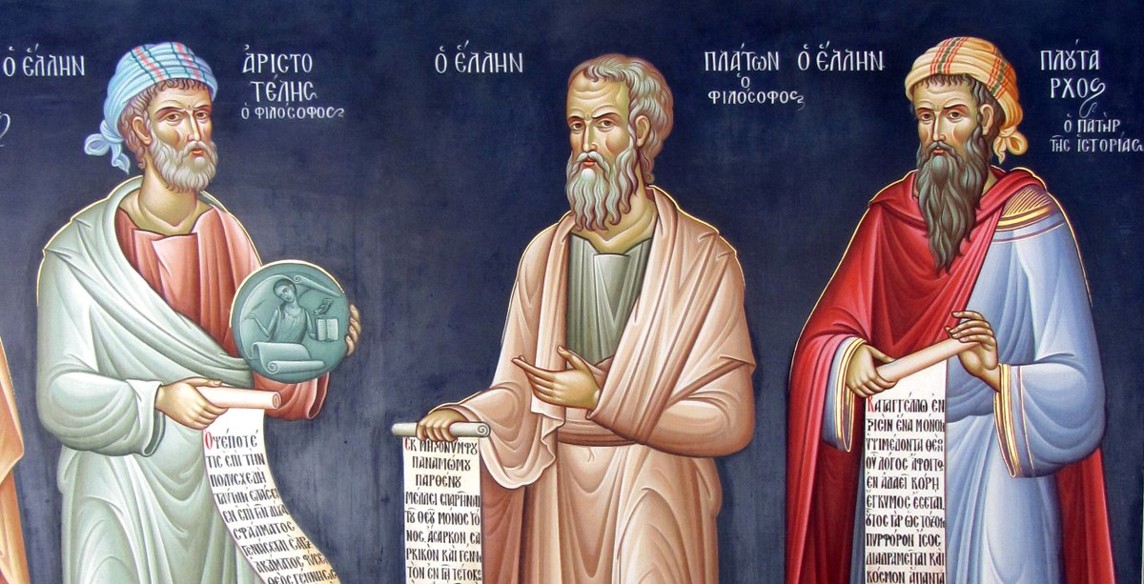
On 7 May 2026, our Faculty Member, Dr Andrew Mellas, delivered the inaugural lecture during the launch of the 2026 Byzantine Month at the Greek Orthodox Church of the Resurrection, Kogarah: "The Byzantine Renaissance of Philosophy". Dr Mellas explored how ancient Greek philosophers sought the Good, the True and the Beautiful, searching for what is beyond this world, even though they lived before the time of the Logos' Incarnation, Passion and Resurrection. However, the eternal Logos sometimes chooses to reveal fragments of God's mysteries even before the "fullness of time". Even though the person of Jesus Christ was something that these ancient philosophers never experienced, they were able to glimpse aspects of the divine mystery. And that is why you sometimes see icons of these philosophers in churches, usually in the narthex, because they occupy a space and time before God became human and died for the salvation of the world.
Dr Mellas took the audience on a journey into Plato’s Republic and one of the recurring themes throughout that book: What is the Good? Of course, there is never a clear answer to that question! Socrates only speaks of what the Good does and what it provides, and how, in doing so, the Good is capstone of all reality, holding all things together. But then there is a moment in the Republic, when we come so close to finding out what the Good is. If you were only ever going to read one sentence from the writings of Plato, and only ponder one thought from all his works, it would be what some have called the Gospel of Plato in a nutshell: “The Good is the source of being for the things that are known and therefore the Good itself is beyond being in dignity and power.”
For the whole Platonic tradition, this is the mystery to be pondered. And when the early Christian tradition wrote about the mystery of God, it gestured toward this statement. Dr Mellas explored how the Cappadocian Fathers received this philosophical tradition and how it became the foundation for St Gregory Palamas's essence-energies distinction. For Palamas the truth of the experience of God is given to the saints even in this life, an experience that affects their mind, their soul, and even their body. Our communion with God and the life of the age to come is a reality that has its beginning already in this present life; a reality that is slowly dawning in this universe ever since the Passion and Resurrection of Christ.
Enrolments Now Open!
.jpg)
Study at St Andrew's

Subject Areas on Offer
Gallery
The Library

The library was established with the opening of St Andrew's in... see more
Useful links
Subscribe to our Blog!
Subscribe to our blog written by our Faculty and learn more about your Orthodox Christian faith
Connect With Us
|
|
|
|
Join Our |


.png)
Copyright © 2019 St Andrew's Greek Orthodox Theological College.
All Rights Reserved. | Website Terms & Conditions