- Home
- About us
- Students
- Courses
- Research
- Library
- News & Events
- Gallery
- Contact
- Our Blog
Latest News

EARLY BYZANTINE PATRISTIC THEOLOGY
T7382A
Unit Weighting
9 cpts
Type of Unit
Specialised
Prerequisites
T181A
Academic Staff
Dr Mario Baghos
Curriculum Objectives
This course unit engages the thought and methods of the early Byzantine Fathers, investigating the major trends within the Greek Christian tradition from the fourth to the seventh century. Building on Early Church Fathers, it assists students to understand the connection between historical circumstances, the spiritual life and the formulation of Christian theology in the early Byzantine period.
Learning Outcomes
At the end of this unit students will be able to:
- Appraise the historical and ecclesial contexts of various trends in early Byzantine tradition
- Display a broad understanding of the main theological and spiritual themes developed by the early Byzantine Fathers
- Utilise primary and secondary sources in the analysis of early Byzantine themes such as Christology and mystical theology
- Analyse in depth themes developed by the early Byzantine Fathers within their immediate and distant literary and historical contexts
- Assess the place of patristic Byzantine tradition within contemporary scholarship and its relevance to Christian experience
Assessment Profile
- Presentation & Write-Up (1,000 words). Value: 20%
- Forum Discussion and Write-Up (1,000 words). Value: 30%
- Essay (1,600 words). Value: 50%
Schedule
3hr lecture per week on campus, or via distance education

Enrolments Now Open!
.jpg)
Study at St Andrew's

Subject Areas on Offer
Gallery
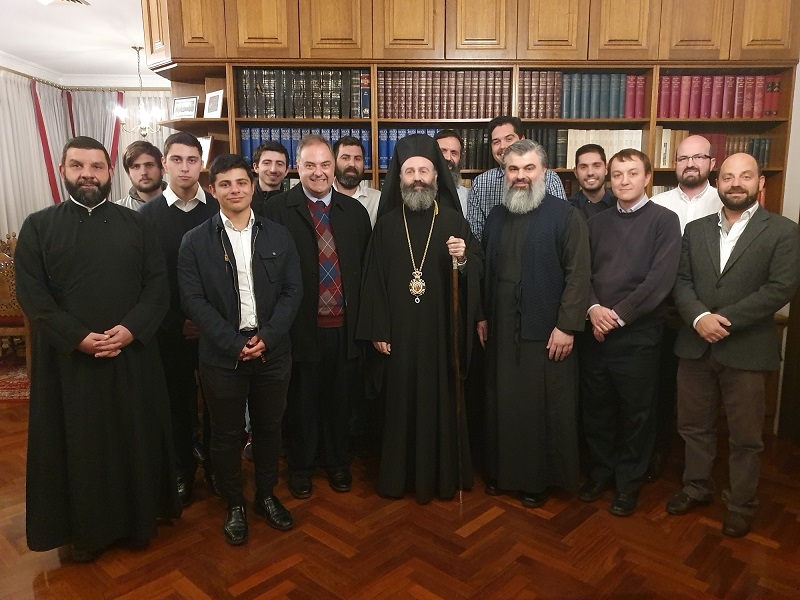
The Library

The library was established with the opening of St Andrew's in... see more
Subscribe to our Blog!
Subscribe to our blog written by our Faculty and learn more about your Orthodox Christian faith
Connect With Us
|
|
|
|
Join Our |


.png)
Copyright © 2019 St Andrew's Greek Orthodox Theological College.
All Rights Reserved. | Website Terms & Conditions