- Home
- About us
- Students
- Courses
- Research
- Library
- News & Events
- Gallery
- Contact
- Our Blog
Latest News

Prof. Angelo Karantonis
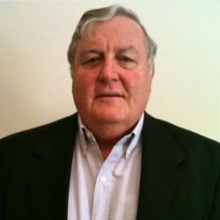
Staff Position:
Editor, Phronema
Biography:
Angelo Karantonis is the editor of the St Andrew’s Theological College’s scholarly peer reviewed journal, Phronema. He is a retired Adjunct Professor at the Central Queensland University (CQU) after holding the position of Associate Professor in Land Economics at the University of Technology, Sydney (UTS). He is a property economist and taught in both undergraduate and post graduate and has published extensively in the discipline. He has held positions of Associate Dean, Research and Head of School in the Faculty of Design Architecture and Building. Angelo played a major role in establishing the first peered reviewed journal in the property discipline in Australia and has served on its editorial board (and editor for some ten years) of the Pacific Rim Property Research Journal (and its predecessor). Angelo also holds a Bachelor of Theology, Sydney School of Divinity, having graduated from St Andrew’s Greek Orthodox Theological College in 2000. He is currently a Council member of St Andrew's Greek Orthodox Theological College and a Council member of the Sydney School of Divinity. He is also a lay preacher in the Greek Orthodox Church and has presented lectures in many of the ‘short courses’ in the areas of Church History, Early Church Fathers, the Nicene Creed, Liturgics, and the Symbolism and Meaning of the Church.
Academic Classification: Professor, BTh (SCD, 2000), MCom (UNSW, 1982), BEc (UNE, 1980).
Email: [email protected]

Enrolments Now Open!
.jpg)
Study at St Andrew's

Subject Areas on Offer
Gallery
The Library

The library was established with the opening of St Andrew's in... see more
Subscribe to our Blog!

Subscribe to our blog written by our Faculty and learn more about your Orthodox Christian faith
Connect With Us
|
|
|
|
Join Our |


.png)
Copyright © 2019 St Andrew's Greek Orthodox Theological College.
All Rights Reserved. | Website Terms & Conditions