- Home
- About us
- Students
- Courses
- Research
- Library
- News & Events
- Gallery
- Contact
- Our Blog
Latest News

The Second Person of the Trinity in the Hymns of Synesius of Cyrene and Gregory of Nazianzus’ 'Poemata Arcana' and Orations
Kevin Wagner, PhD
Lecturer, University of Notre Dame, Sydney
Abstract: The early fifth century bishop, Synesius of Cyrene, was formed in the Neo-Platonic school of Hypatia of Alexandria. His writings disclose the fact that he struggled to integrate his Greek paideia and the Christian faith of his childhood. Most crucially we may note his infrequent use of the name of Jesus in his written corpus. Here we will examine his nine extant hymns – which are the most theological of his writings – in order to determine (within the limits of the genre) the orthodoxy of his Christology. To this end, we will investigate the influence of Gregory Nazianzen on Synesius. The juxtaposing of the Christologies of these two bishops offers a unique insight into Synesius’ acceptance of the Person after whom Christianity is named.

Enrolments Now Open!
.jpg)
Study at St Andrew's

Subject Areas on Offer
Gallery
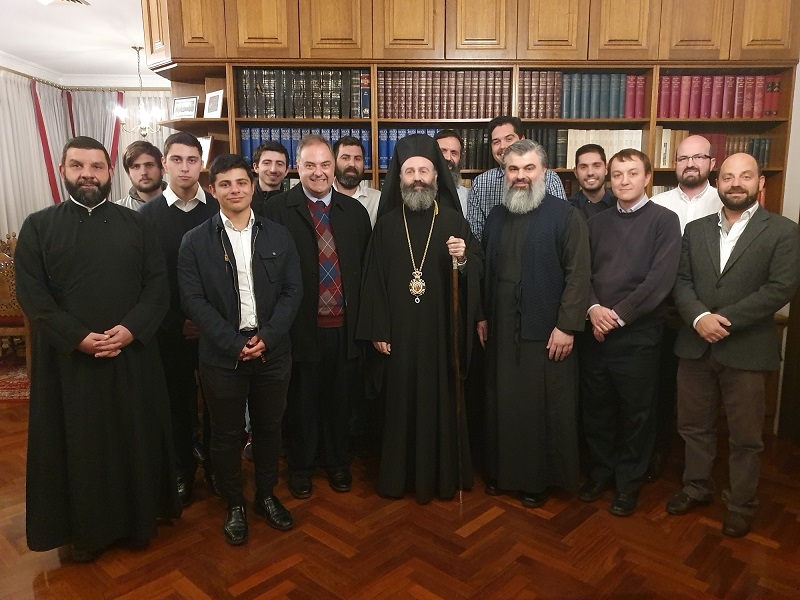
The Library

The library was established with the opening of St Andrew's in... see more
Subscribe to our Blog!
Subscribe to our blog written by our Faculty and learn more about your Orthodox Christian faith
Connect With Us
|
|
|
|
Join Our |


.png)
Copyright © 2019 St Andrew's Greek Orthodox Theological College.
All Rights Reserved. | Website Terms & Conditions