- Home
- About us
- Students
- Courses
- Research
- Library
- News & Events
- Gallery
- Contact
- Our Blog
Latest News

Worldview and Melodic Imagery in Clement the Alexandrian, Saint Athanasius, and their Antecedents in Saints Ignatius and Irenaeus
Doru Costache, ThD. Senior Lecturer, St Andrew’s Greek Orthodox Theological College.
Abstract: The paper addresses aspects of the melodic imagery utilised within two Alexandrine apologies, Exhortation to the Gentiles, by Clement, and Against the Gentiles, by St Athanasius, together with their significance for the early Christian interactions with broader cultural milieus, as well as for the articulation of the ecclesial worldview. Borrowing from various sources, the two fathers employed musical metaphors and analogies for both the active rapports between the Logos and the universe, and the theological meaningfulness of the cosmos. Beginning with a review of the Christian antecedents of this approach in St Ignatius and St Irenaeus, the paper highlights, together with the continuity of tradition in representing the cosmos by way of melodic imagery, the relevance of this topic to current researches into the articulation of the cosmos as another Scripture.

Enrolments Now Open!
.jpg)
Study at St Andrew's

Subject Areas on Offer
Gallery
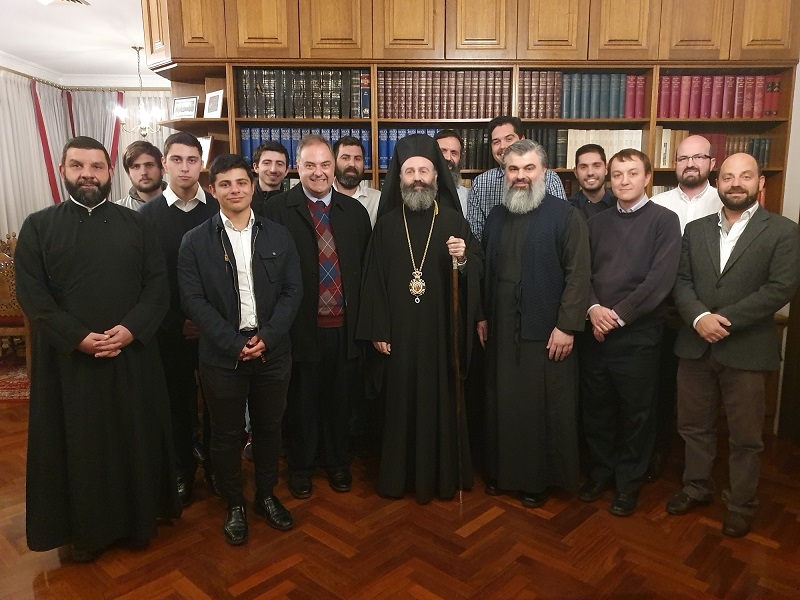
The Library

The library was established with the opening of St Andrew's in... see more
Subscribe to our Blog!
Subscribe to our blog written by our Faculty and learn more about your Orthodox Christian faith
Connect With Us
|
|
|
|
Join Our |


.png)
Copyright © 2019 St Andrew's Greek Orthodox Theological College.
All Rights Reserved. | Website Terms & Conditions