- Home
- About us
- Students
- Courses
- Research
- Library
- News & Events
- Gallery
- Contact
- Our Blog
Latest News

Clement of Alexandria’s Exegesis of Old Testament Theophanies
Bogdan G. Bucur, PhD. Associate Professor, Duquesne University.
Abstract: The interpretation of Old Testament theophanies was crucial for early Christianity’s theological appropriation of the sacred history of Israel, and figured significantly in the anti-Jewish, anti-dualistic, and anti-monarchian polemics of the second and third centuries. A Christian continuator of Philo’s “noetic exegesis,” Clement of Alexandria inaugurates an approach to theophanies that is different from that of some of his predecessors and contemporaries, but no less important from a reception-historical perspective, inasmuch as it laid the groundwork for the valorisation of theophanies for Christian spirituality.

Enrolments Now Open!
.jpg)
Study at St Andrew's

Subject Areas on Offer
Gallery
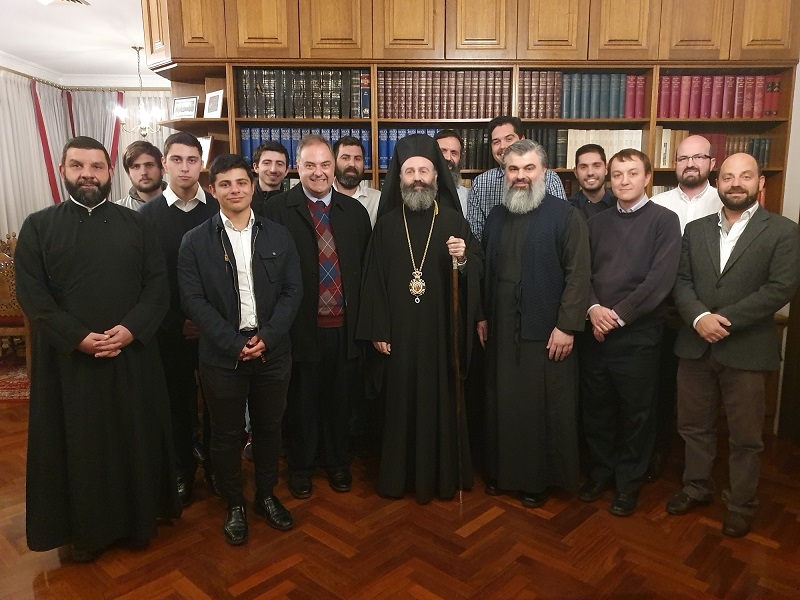
The Library

The library was established with the opening of St Andrew's in... see more
Subscribe to our Blog!
Subscribe to our blog written by our Faculty and learn more about your Orthodox Christian faith
Connect With Us
|
|
|
|
Join Our |


.png)
Copyright © 2019 St Andrew's Greek Orthodox Theological College.
All Rights Reserved. | Website Terms & Conditions